Commercial Metal Roof Coating
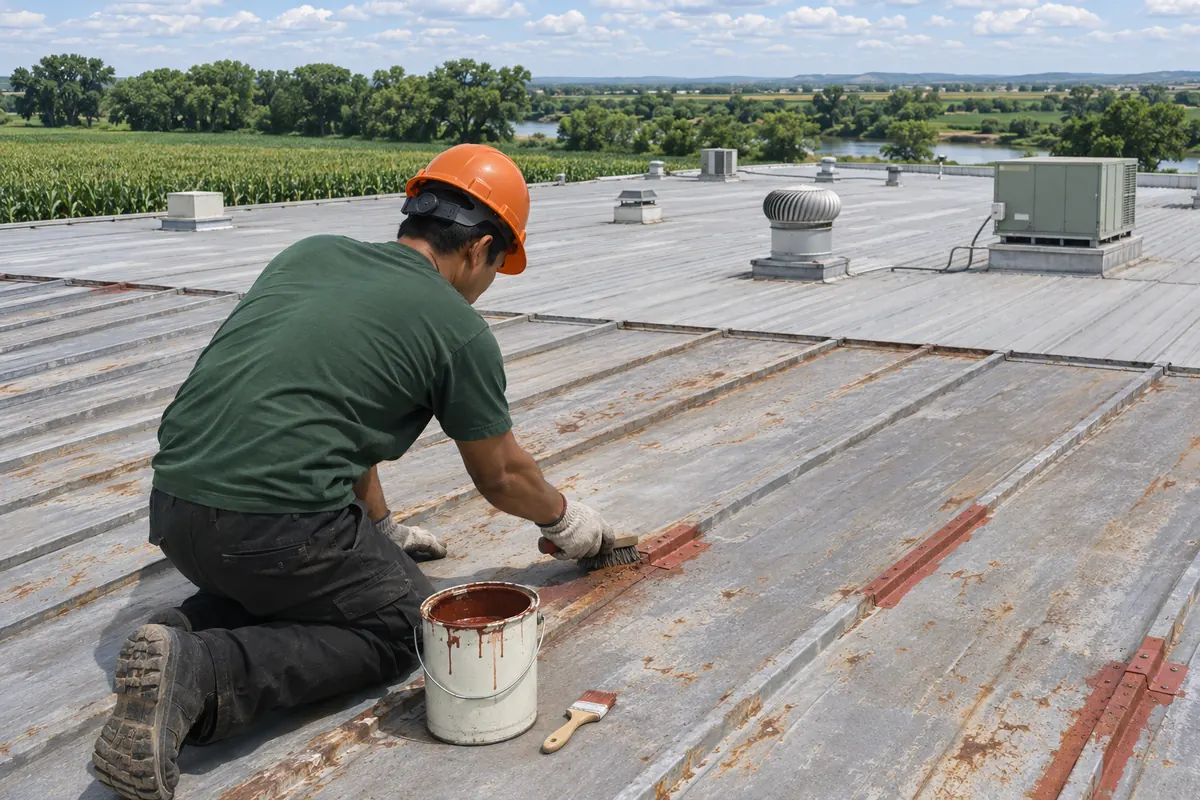
Exposed-fastener R-panel and PBR roofs with rust at laps and screws, on plants, shops, and warehouses whose purlins are still straight.
Order Of Work
- 1Wash
- 2Prime Rust
- 3Seal Laps
- 4Topcoat
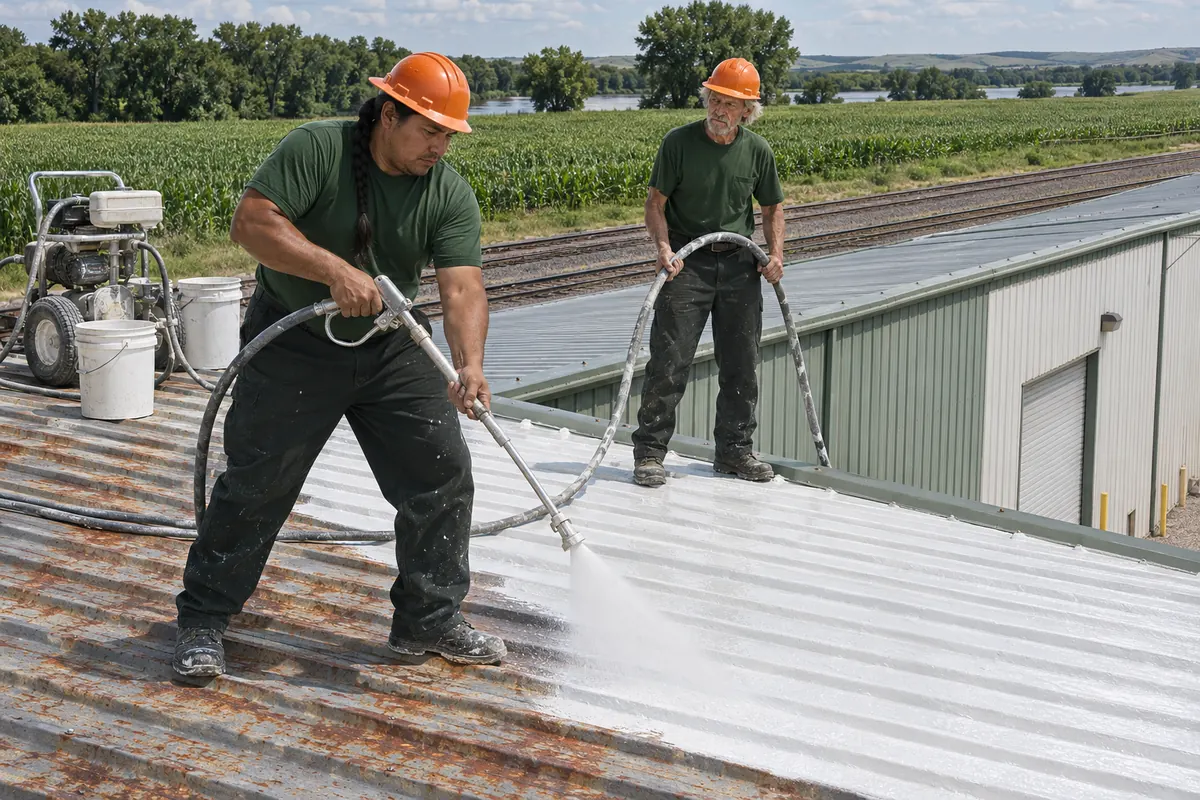
As a Fremont metal roof coating contractor, we tighten fasteners, prime rust, seal laps, and coat steel roofs on plants, shops, and warehouses.
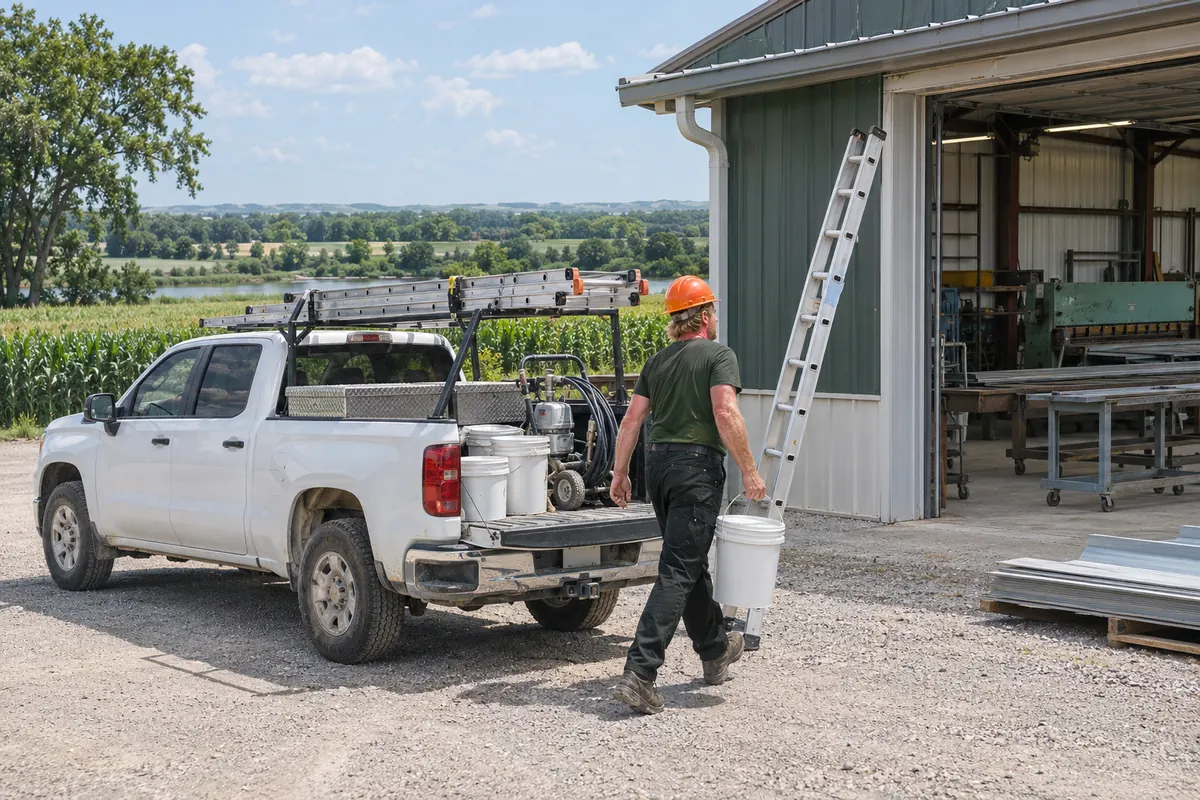
Fremont metal roof coating work starts with the roof you have: steel panels, a low-slope deck, an older foam roof, or shingles on a church or office.
Exposed-fastener R-panel and PBR roofs with rust at laps and screws, on plants, shops, and warehouses whose purlins are still straight.
Order Of Work
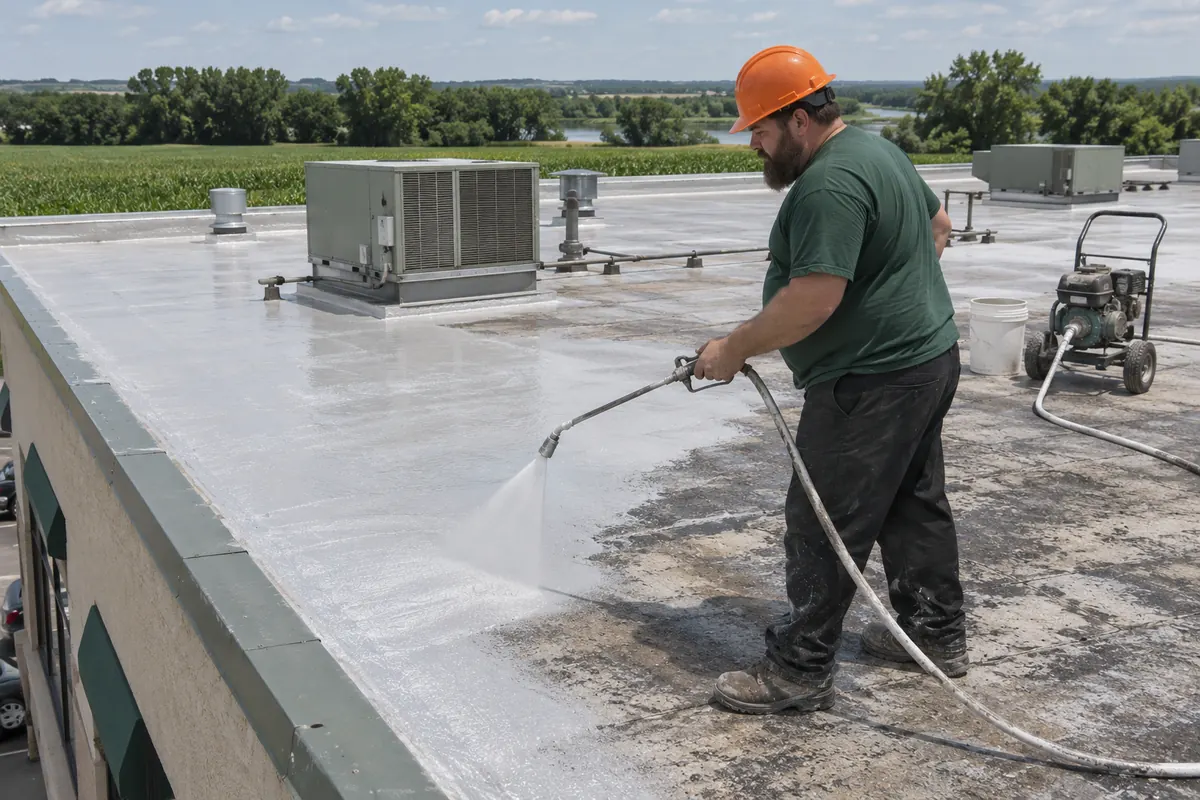
Low-slope sections where water sits after rain, since silicone holds up to ponding and sun better than water-based coatings.
Order Of Work
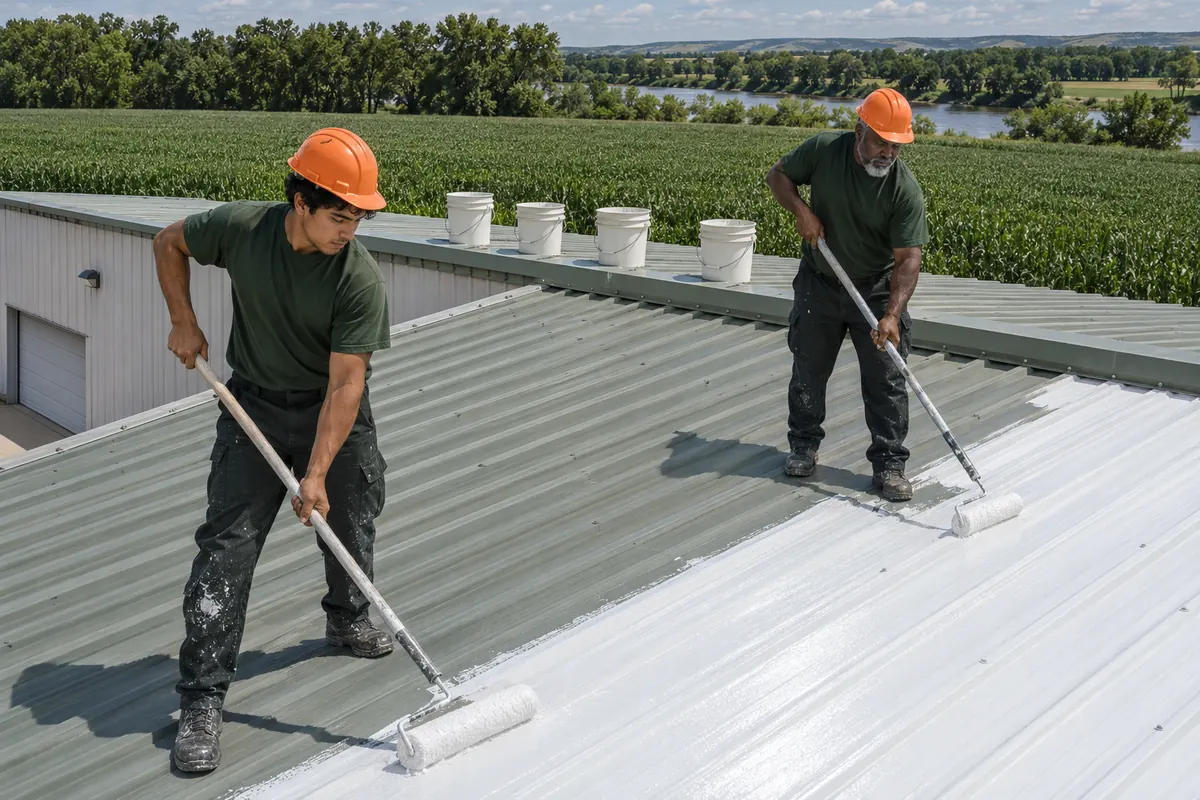
Sloped steel that sheds water fast, for an owner who wants a bright white surface and simple acrylic recoats later.
Order Of Work
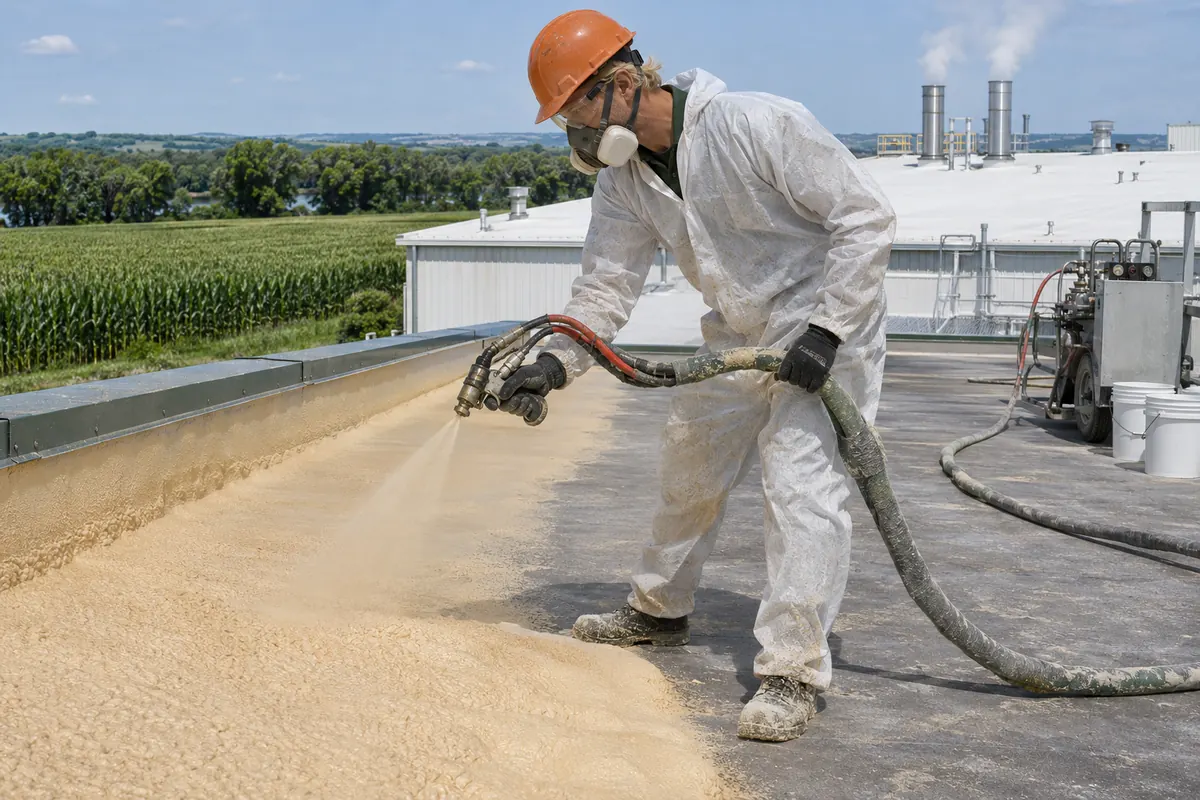
Tired flat or metal roofs that need insulation and one continuous surface, sprayed over a dry substrate and sealed with a topcoat.
Order Of Work
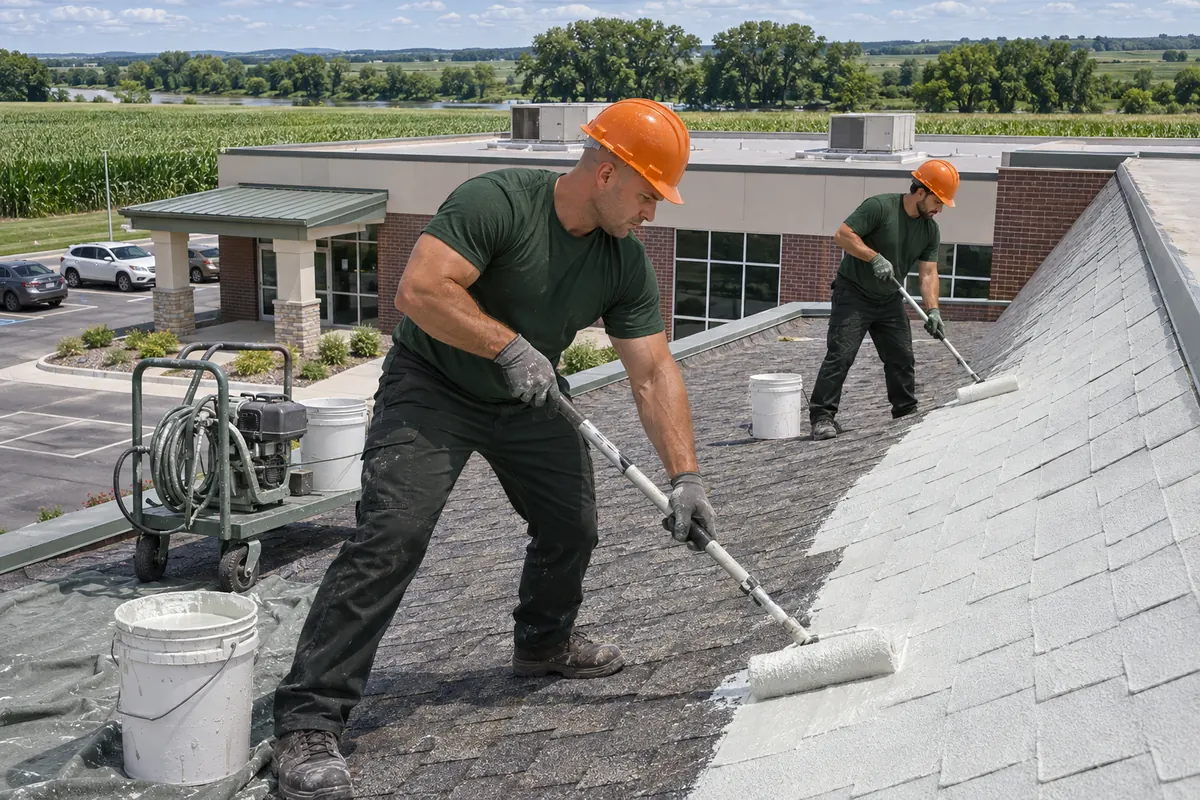
Offices, churches, and small retail roofs with shingles that lie flat and still carry most of their granules.
Order Of Work
Every roof moves through the same four stages, and nothing gets coated until the stage before it passes.
Get Free EstimateWe walk the whole roof with you or your facility manager, count failed screws, mark rust at laps and eaves, check gutters for ponding, and look inside for stains below.
Stripped screws come out for larger-diameter fasteners with new washers. Rusted-through panel ends get patched or replaced, and loose flashing at curbs and walls is refastened.
Pressure washing takes off dirt, chalk, and rail soot. Wire wheels clear heavy scale, rust-inhibitive primer goes on bare spots, and laps and screw heads get a reinforced base coat.
Coating goes on section by section at the thickness the manufacturer specifies, checked with a wet mil gauge. Each coat cures before the next, and we walk the finished surface with you.
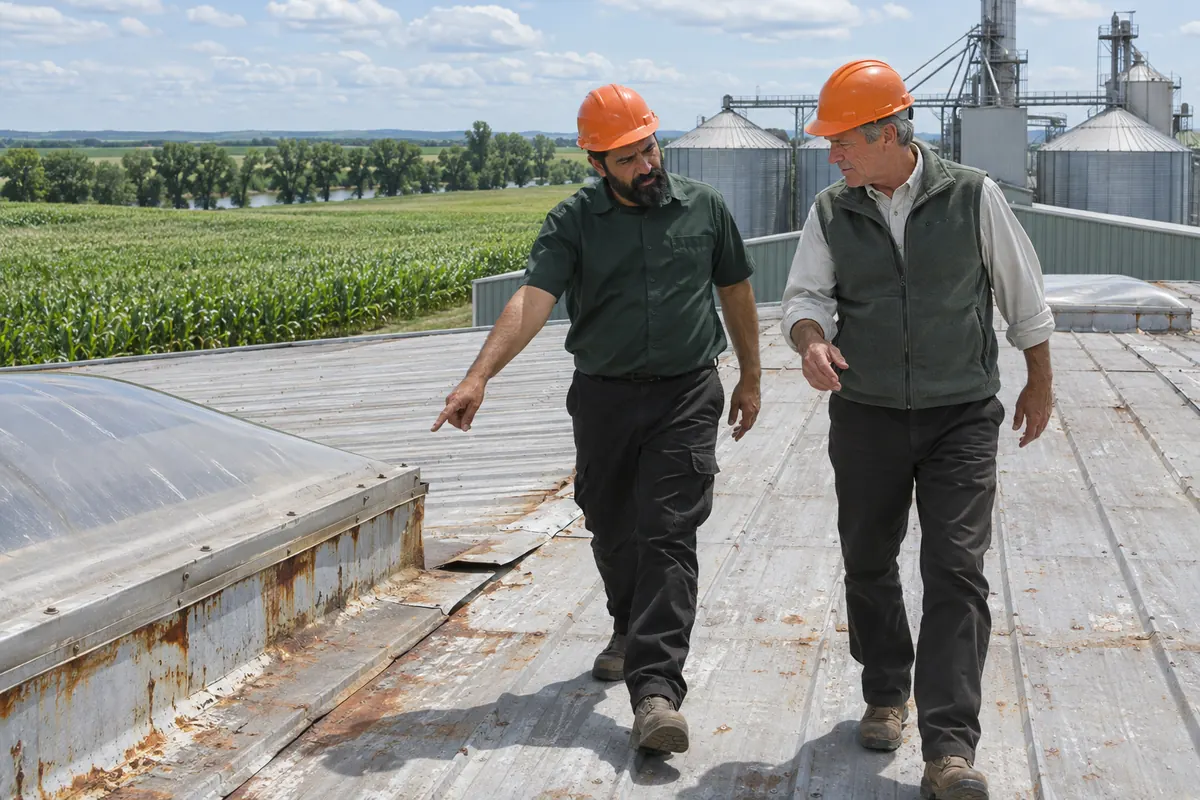
Coating keeps the steel you already paid for and puts a new waterproof skin over it.
The existing roof stays on, so there is no tear-off, dumpster, or open deck above your stock or machinery.
Each fastener and side lap ends up under one continuous film instead of relying on aging washers and old tape sealant.
White topcoats keep panel surfaces cooler, so the steel moves less between hot afternoons and cool nights.
Our coating planning range is about $2.50 to $4.00 per square foot, against about $5 to $8 for replacement.
When the topcoat wears thin down the road, a cleaned and recoated surface renews the system without stripping it.
Send us the roof size and a few details, and you will see a planning range for coating and for replacement before anyone climbs a ladder.
What To Have Ready
Most roof problems show up indoors first. Here is how what you see inside lines up with what we find on the steel.
Inside The BuildingDrips along a purlin line. Water follows the purlin from a leak several feet uphill.
On The RoofBacked-out screws. Washers dry out, screws loosen as panels move, and water runs in at the head.
Inside The BuildingStained tiles near a wall. The stain sits right below where the roof meets a wall or parapet.
On The RoofLoose wall flashing. Flashing pulls away from the wall and the sealant behind it cracks.
Inside The BuildingWater marks after windy storms. Streaks appear only after rain blown sideways by wind.
On The RoofOpen side laps. Side laps lose their sealant tape and let wind-driven rain in along the seam.
Inside The BuildingRust flakes on stored stock. Fine orange flakes land on shelves or machinery under the roof.
On The RoofRust at panel ends and eaves. Water sits at the low end of each panel and eats through the bottom edge first.
Match what you see on your roof to the work it usually needs. The final call comes after the roof walk.
| What You See On The Roof | Coat After Prep | Repair First, Then Coat | Replace Panels |
|---|---|---|---|
| Light surface rust and loose screws | Usually fits | Sometimes | Rarely |
| Open side laps and dried-out sealant | Usually fits | Sometimes | Rarely |
| Rust holes at a few panel ends | Sometimes | Usually fits | Sometimes |
| Water standing in low sections after rain | Sometimes | Usually fits | Rarely |
| Sagging purlins or soft, wet insulation | Rarely | Sometimes | Usually fits |
| Rust-through across most of the roof | Rarely | Rarely | Usually fits |
Is your building near Fremont? We coat commercial metal roofs across the towns below; for anywhere else, call us or send us a message.
| Town | County | What We See On Roofs There |
|---|---|---|
| Fremont Home Base | Dodge | Rail-side warehouses, food plants, and fabrication shops with soot, weld fume film, and rust at the side laps. |
| Wahoo | Saunders | Smaller shop and storefront steel roofs, where setup makes up a bigger share of the price per square foot. |
| Valley | Douglas | Warehouse and distribution roofs big enough that we coat them in planned sections. |
| West Point | Cuming | Machine sheds and livestock-area buildings with rust working in at the eaves and fastener rows. |
| Arlington | Washington | Business roofs where dry stretches between coats set the order and pace of the job. |
| North Bend | Dodge | Older steel roofs carrying tar patches and mismatched sealant from past repairs. |
Short answers to the questions owners ask on almost every roof walk.
It lasts as long as the film stays thick enough. Coating makers rate their systems in years at a stated dry film thickness, so we apply to that number and check it with a gauge. Thin spots, water pooling at gutters, and heavy foot traffic wear it faster, and a yearly walk catches them.
Coating leaves the panels, purlins, and insulation where they are and adds a new waterproof surface on top. Replacement strips the steel, hauls it off, and installs new metal, so the job is bigger and the building sits open longer. Solid steel can be coated; rust-through across the roof points to new panels.
It pays off when the panels and purlins are solid and the leaks come from screws, laps, and surface rust, on a building with plenty of working years ahead. If rust has eaten through much of the roof, or the building faces demolition or a major remodel, we say so and point you toward other work.
Plan on about $2.50 to $4.00 per square foot for coating. Clean roofs with light rust and few repairs sit near the low end. Heavy rust, many failed screws, extra coats, and hard access push the price toward the high end. For comparison, replacement plans at about $5 to $8 per square foot.
Food plant roofs are planned around sanitation rules and air intakes. We locate every makeup air unit and exhaust fan first, then schedule spraying for hours when intakes can be shut down or covered. Low-odor and water-based products are options close to intakes, and your safety staff can review the product data sheets before work starts.
Call to talk through your roof, or start a free ballpark estimate with your roof size and building address.