Silicone Roof Coating
Flat additions and low-pitch sections that pond often do better under silicone than acrylic.
As a Fremont commercial metal roof coating contractor, we restore screw-down steel roofs on plants, shops, and rail-side warehouses without tearing them off.
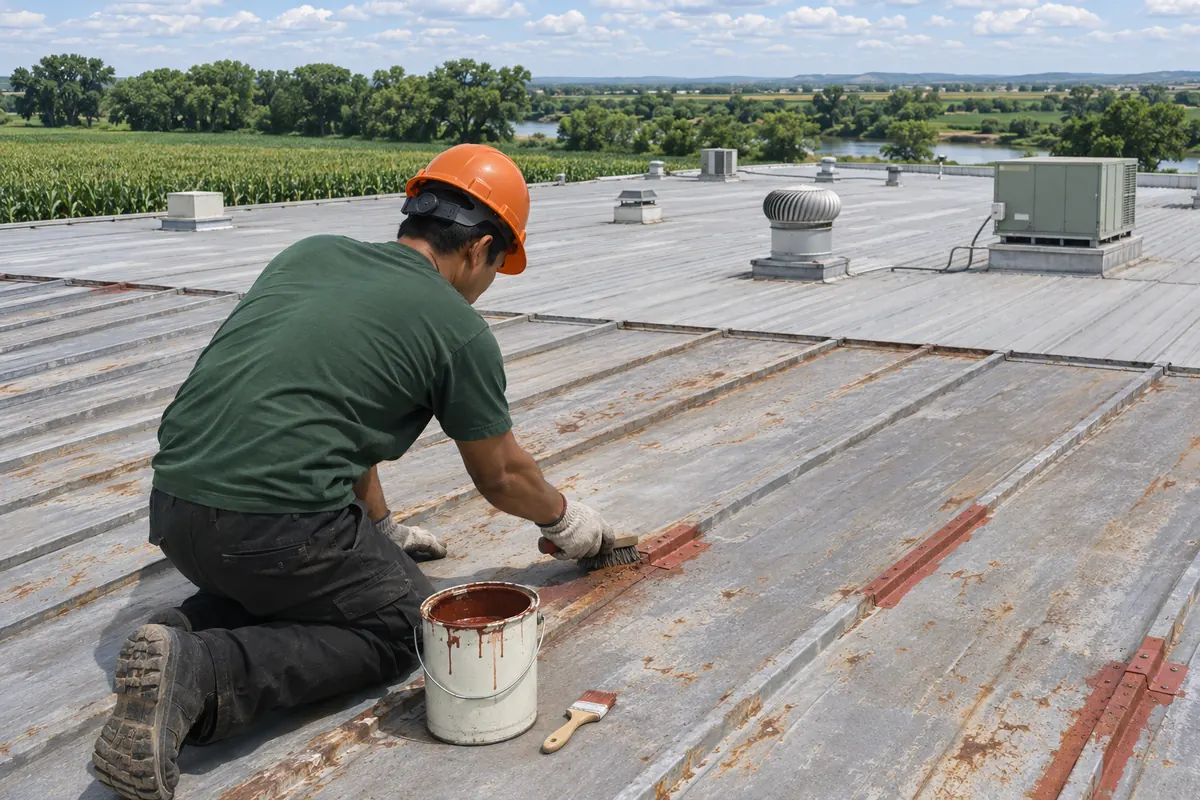
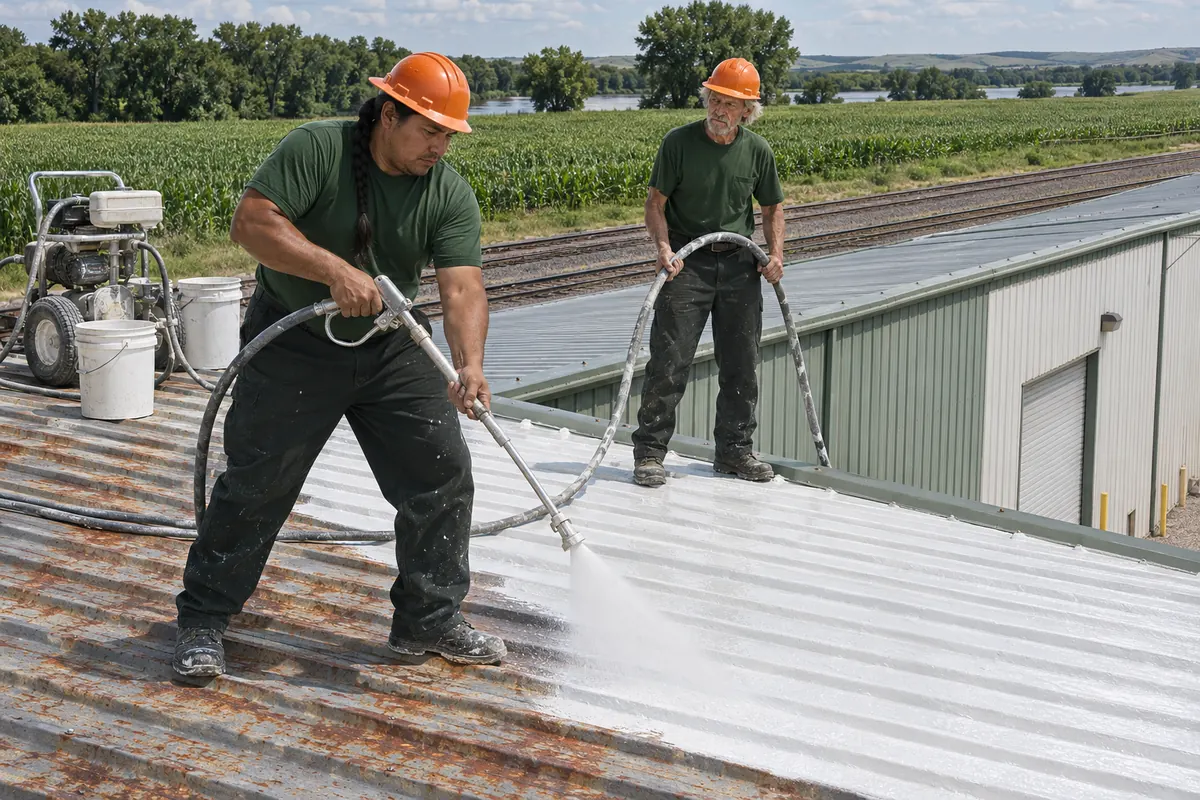
Fremont commercial metal roof coating works best on steel that is still straight and solid. Find your roof's condition below; the roof walk confirms it.
| What You See On The Roof | Good Fit | Fit After Repairs | Look at Another System |
|---|---|---|---|
| Surface rust with solid steel underneath | Usually fits | Sometimes | Rarely |
| Loose and backed-out screws | Usually fits | Sometimes | Rarely |
| Open side laps along the panel runs | Usually fits | Sometimes | Rarely |
| Holes rusted through at panel ends | Sometimes | Usually fits | Rarely |
| Bent purlins or a sagging roof line | Rarely | Rarely | Usually fits |
Each pair links what you notice inside to the roof detail behind it.
Inside The BuildingA drip under one screw row. Water shows up in a straight line below the roof.
On The RoofDried washers. Rubber washers crack and shrink, and water rides the screw shank into the building.
Inside The BuildingRust streaks on the inside of panels. Brown lines run down from lap joints.
On The RoofLap tape gone. Sealant between overlapping panels has dried out and pulled apart.
Inside The BuildingLeaks only in wind-driven rain. Water appears after storms from one direction.
On The RoofLoose rake and eave trim. Edge trim screws back out and lift, letting rain blow under the panel ends.
Inside The BuildingDrips around an exhaust fan. Water collects on the floor near a roof fan or unit.
On The RoofCracked curb flashing. Sealant at the curb splits as the steel moves with heat and cold.
Steel roofs take more than one system. These are the options we weigh on a Fremont metal building.
| Option | What It Is | Where It Fits | Watch For |
|---|---|---|---|
| Acrylic Steel System | Rust primer, fabric at laps, two acrylic coats | Sloped panels that drain quickly | Water that sits at gutters |
| Silicone Steel System | Primer, base at laps, silicone topcoat | Low-pitch runs that hold water | Future recoats stay silicone |
| Urethane Base With Topcoat | Tough base layer under a UV topcoat | Roofs walked often to service units | More cost per square foot |
| Spot Repair and Seal Only | Screws, laps, and curbs sealed, no full coat | Newer roofs with a few leak points | Bare steel still exposed to sun |
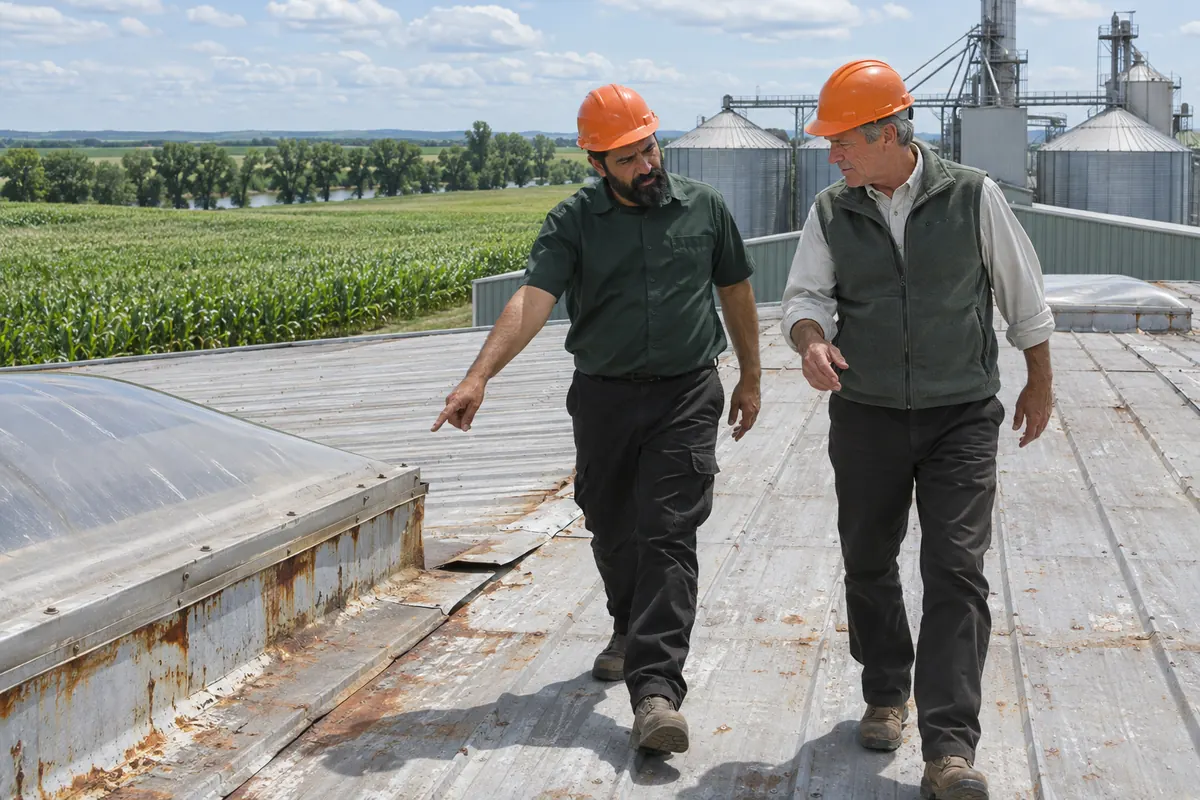
On solid steel, a coating system fixes the leak points and protects the panels in one job.
The panels stay put, so there is no open roof over your inventory or production line while the work happens.
Each fastener head gets sealant or base coat, then disappears under the continuous topcoat.
Primer goes on scale and surface rust before it can spread down the panel ends.
A white topcoat reflects much of the sun, so panels move less and laps stay tighter.
Get a ballpark range for coating your steel roof and for replacing it, using the roof size and address.
What To Have Ready
Four stages, done in order, on every steel roof we coat.
Get Free EstimateWe count fasteners by run, check every lap, and sort rust into surface, scale, and holes. Inside, we match stains and drips to the roof sections above them.
Stripped screws are swapped for larger-diameter fasteners with new washers. Holes get metal patches or panel sections, and cracked curb flashing is reset.
Washing removes chalk and rail soot. Heavy scale is ground or wire-wheeled, rust-inhibitive primer covers the treated steel, and laps get fabric set in base coat.
Full coats go over the field at the specified mils, checked with a gauge as we work. Each coat cures before the next one starts.
Some buildings need a different system on part of the roof.
Flat additions and low-pitch sections that pond often do better under silicone than acrylic.
Steep, fast-draining panels can take a white acrylic coat that is easy to refresh later.
Uninsulated steel buildings can get foam over the panels for insulation and one continuous surface.
Answers about prep, product choice, and code on steel roofs.
We test every screw before any coating goes on. Loose ones are snugged down, and stripped or rusted ones are replaced with larger-diameter fasteners and fresh washers. Each head then gets sealant or a brushed base coat, and the topcoat seals over all of them as one layer.
It depends on the depth. Light surface rust is cleaned and covered with rust-inhibitive primer. Thick scale is ground or wire-wheeled off first. Rust-through gets a metal patch or a new panel section. The primer always matches the coating system so each layer bonds to the one under it.
Restoration means cleaning, rust treatment, fastener and lap repair, and a full coating system. Roofs near the rail lines collect diesel soot and dust that block adhesion, so we wash with a cleaner made for that residue and run an adhesion test before coating the whole roof.
Slope and water decide it. Acrylic suits steel that drains fast and can be recoated with acrylic later. Silicone suits low runs where water lingers. A urethane base holds up under foot traffic around rooftop units. We choose by roof section after the inspection.
Yes, after the residue comes off. Weld fume film, oil, and grinding dust settle on shop roofs, so we degrease, rinse, and test adhesion first. Exhaust fans and makeup air units get careful flashing, and the coating goes on in sections around shop hours.
The 2018 International Building Code. Nebraska's state building code adopts the 2018 IBC and the 2018 International Existing Building Code under Neb. Rev. Stat. 71-6403, and Fremont's building permit page cites the 2018 IBC. The Fremont Building Department confirms which provisions apply to your project.
Call about your steel roof, or start a ballpark estimate to see coating and replacement ranges side by side.