Silicone Roof Coating
Silicone makes a common topcoat for foam on flatter roofs that still hold a little water.

As a Fremont spray foam roofing contractor, we spray foam over dry flat and metal roofs, then seal it with a coating that keeps sun and water off.
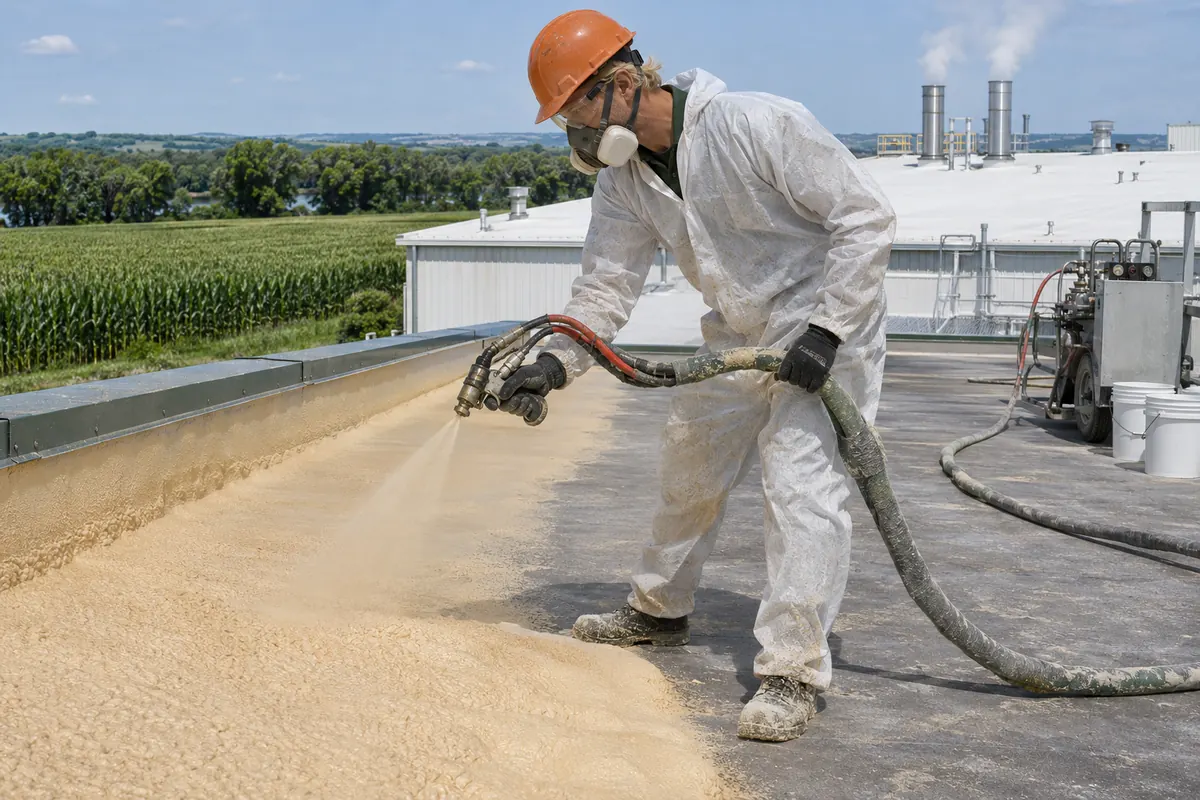
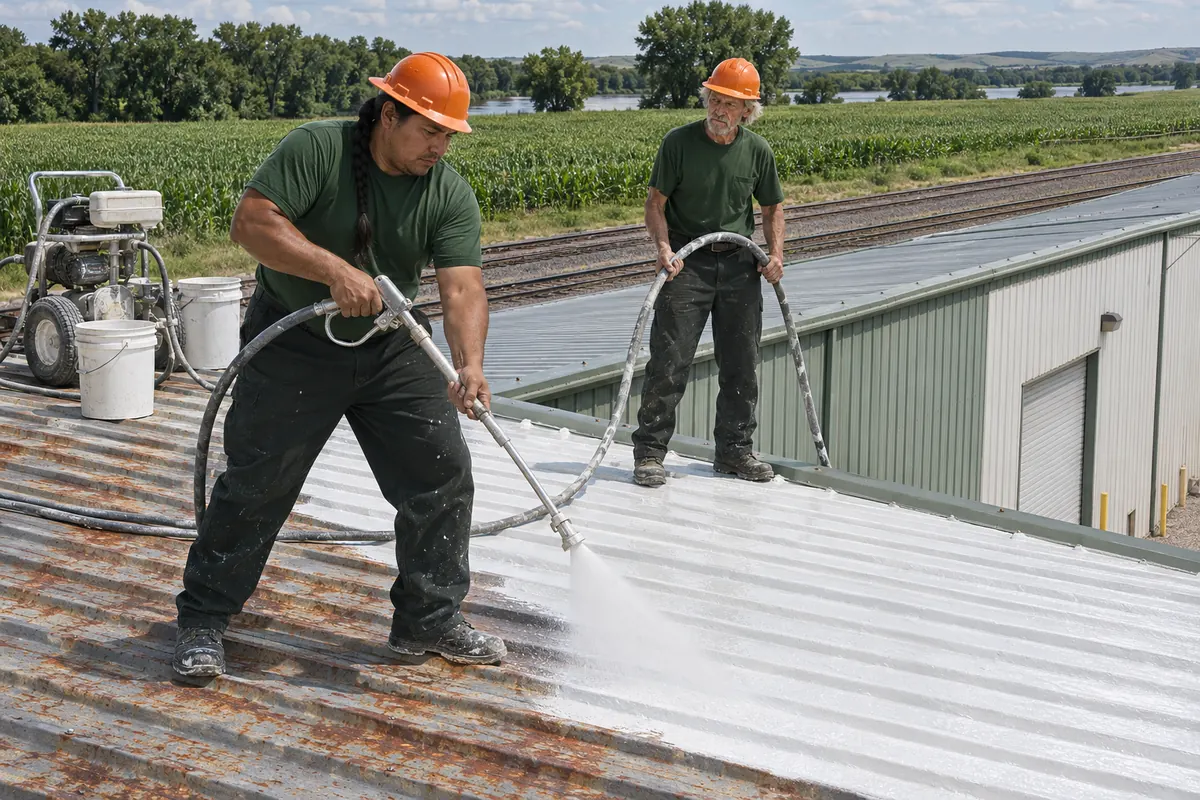
Fremont spray foam roofing goes over many existing roofs once they are dry and firmly attached. Compare your roof's condition with these rows.
| What You See On The Roof | Good Fit | Fit After Repairs | Look at Another System |
|---|---|---|---|
| Flat roof with many curbs and pipes | Usually fits | Sometimes | Rarely |
| Uninsulated steel building | Usually fits | Sometimes | Rarely |
| Low spots that hold water | Usually fits | Sometimes | Rarely |
| Wet insulation under the current roof | Rarely | Usually fits | Sometimes |
| Tight site with cars parked beside the walls | Sometimes | Sometimes | Sometimes |
What owners notice inside, matched to the roof issue foam addresses.
Inside The BuildingHigh heating and cooling bills. The space under the roof swings hot and cold.
On The RoofThin or no insulation. The roof carries little insulation, or none on bare steel.
Inside The BuildingLeaks at many penetrations. Water shows up around pipes, vents, and units.
On The RoofFlashing at every curb. Each curb and pipe has its own flashing and sealant to fail.
Inside The BuildingWater lines on the ceiling. Rings form where water sits overhead.
On The RoofFlat spots with no slope. The roof has no fall toward drains, so water stays put.
Inside The BuildingCrumbling foam bits in gutters. Tan chunks wash off an older foam roof.
On The RoofWorn foam topcoat. Sun has worn through the old coating and is breaking down the foam.
Foam roofs are finished and maintained with a few different approaches.
| Option | What It Is | Where It Fits | Watch For |
|---|---|---|---|
| New Foam Over Existing Roof | Foam sprayed to set thickness, then topcoat | Dry flat roofs and steel buildings | Moisture trapped under foam |
| Silicone Topcoat on Foam | Moisture-cured silicone over fresh foam | Foam roofs with low spots | Silicone-only recoats later |
| Acrylic Topcoat on Foam | Two or more acrylic coats over foam | Foam roofs that drain well | Ponding softens acrylic |
| Foam Repair and Recoat | Wet foam cut out, refilled, recoated | Older foam roofs with worn coating | Hidden wet foam areas |
Foam rebuilds the top of the roof and adds insulation in the same layer.
Foam covers seams, laps, and fasteners in a single layer stuck to the surface, with nothing to split.
Each inch of foam adds insulation without opening the roof from inside.
Thicker passes in the right places help steer water toward drains.
Little weight goes onto the building, so many existing roofs can stay in place underneath.
Start a ballpark estimate with the roof size and address, then we check whether the roof is dry enough for foam.
What To Have Ready
Foam work depends on a dry roof and calm air. These stages keep both in check.
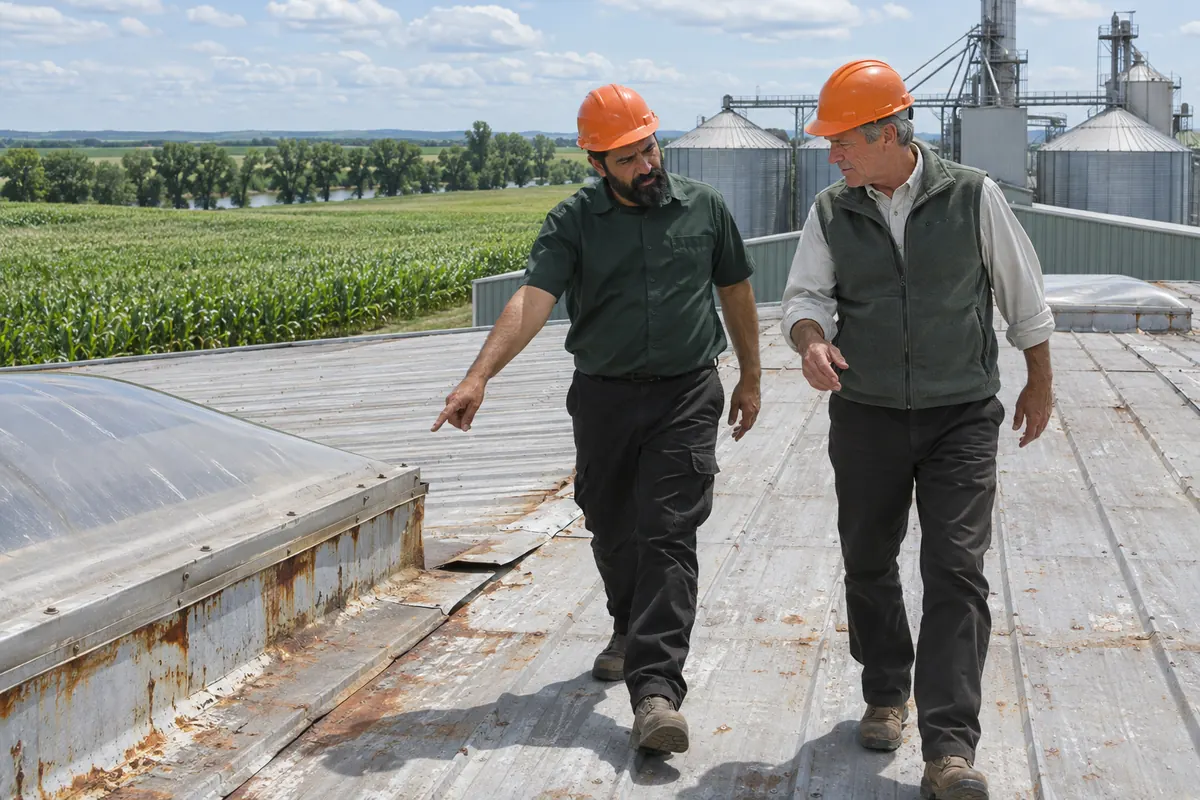
Get Free EstimateMoisture readings and core cuts find wet areas. We map curbs, vents, and drains, and note where parked cars and air intakes sit around the building.
Wet insulation and failed patches come out. Loose metal is fastened down, and any deck damage found under wet areas is repaired.
The surface is cleaned and dried. Rooftop units, intakes, and walls are masked, and screens go up when cars or neighbors sit downwind.
Foam is sprayed to thickness and topcoated right after. Down the road, a recoat renews the topcoat before the foam is exposed.
Foam is often part of a mixed approach on one building.
Silicone makes a common topcoat for foam on flatter roofs that still hold a little water.
Steel roofs with enough insulation already can skip foam and take a coating system directly.
Well-drained foam roofs can use acrylic as the topcoat and later recoats.
Answers about foam roofs, from leaks to weather on spray day.
It will when the foam covers every seam, lap, and screw in one continuous layer stuck tight to the steel. We spray over cleaned steel so the foam fills the low spots between ribs, then seal it with a UV-resistant coating. Any panels rusted through get repaired before the foam goes on.
As long as the topcoat keeps sun and water off the foam. Exposed foam breaks down and soaks up water. Regular inspections, quick puncture repairs, and recoating on schedule keep it going, and the foam thickness and topcoat chosen at the start matter too.
Cleaning, foam repair, priming where needed, and a fresh topcoat. Wet or crushed foam is cut out and refilled first. Thickness readings tell us how much old coating is left, and the new topcoat has to be compatible with what is already there.
On the plus side, foam adds insulation, forms one continuous surface, and can build slope toward drains while staying light. On the minus side, it suffers if the topcoat wears through, punctures easily, and needs calm, dry, mild weather to spray. Walk pads protect it where people and birds cause wear.
Only when the wind is low. Breezes carry overspray onto cars, buildings, and neighbors, and wind also cools the foam as it rises. We track wind speed and direction on the roof, put up screens where needed, and stop spraying when gusts pick up.
Hail can crack or pit the coating on foam and steel and expose what is under it. Dents in steel rarely leak by themselves, but broken coating lets sun and water in. After a hailstorm we walk the roof, mark each hit, and patch or recoat before the exposed spots break down.
Call about adding foam to your roof, or start a ballpark estimate with the size and address.