Silicone Roof Coating
Low runs where water pools need silicone, which handles ponding that acrylic would not.
As a Fremont acrylic roof coating contractor, we roll and spray white acrylic over cleaned, primed steel roofs that shed water quickly.
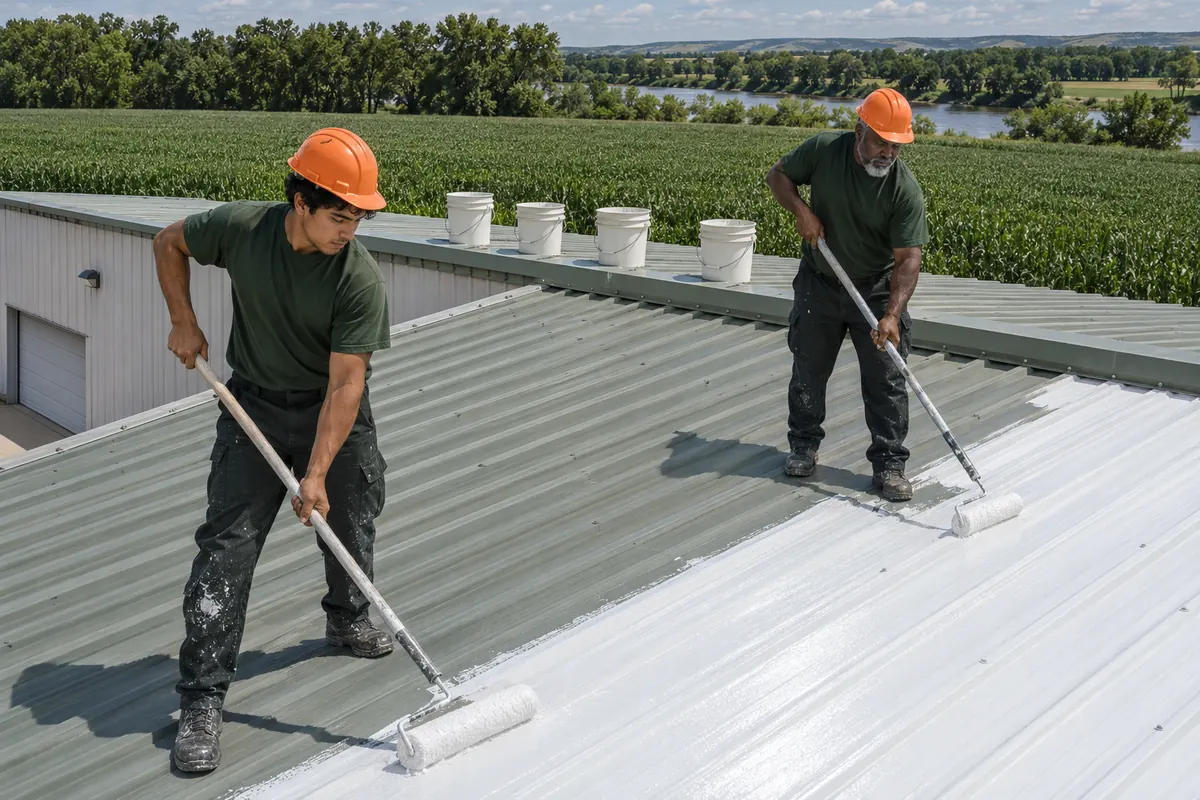
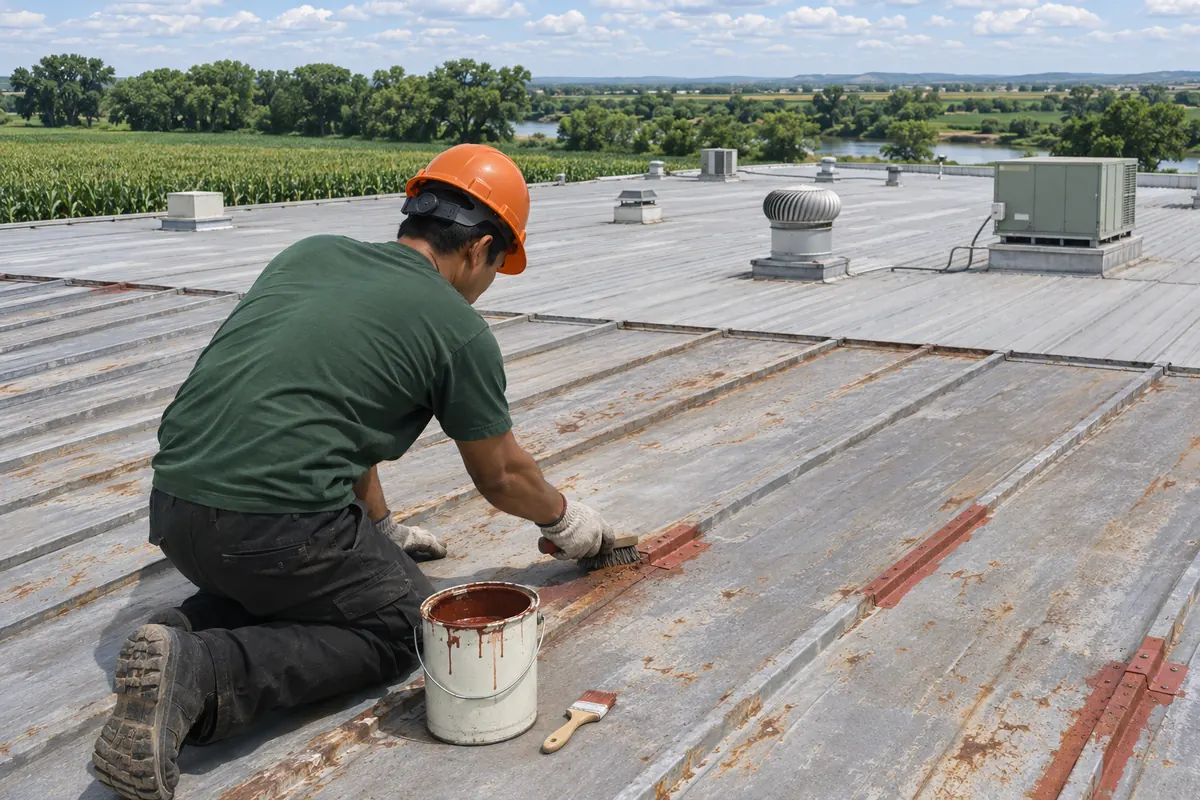
Fremont acrylic roof coating needs a roof that sheds water and a few dry, mild days in a row. See where your roof lands.
| What You See On The Roof | Good Fit | Fit After Repairs | Look at Another System |
|---|---|---|---|
| Pitched steel panels that drain within hours | Usually fits | Sometimes | Rarely |
| Older acrylic coating that is chalky but attached | Usually fits | Sometimes | Rarely |
| Rust at laps and screws | Sometimes | Usually fits | Rarely |
| Water standing at gutters for days | Rarely | Sometimes | Usually fits |
| Flat roof with low spots | Rarely | Rarely | Usually fits |
Signs inside the building that point to a sloped steel roof ready for acrylic.
Inside The BuildingHot shop floor in summer. Work areas under the roof run hot all afternoon.
On The RoofBare or faded panels. Old paint is gone and dark steel absorbs heat.
Inside The BuildingSmall drips at panel overlaps. Water shows up along the lines where panels meet.
On The RoofDry lap sealant. Sealant between panels has hardened and cracked.
Inside The BuildingRust flakes on equipment. Orange dust collects on machines below.
On The RoofRust at screws and eaves. Surface rust spreads from fastener heads and lower panel edges.
Inside The BuildingChalky residue on gutters. White powder washes into gutters and downspouts.
On The RoofWorn old coating. An earlier coating has chalked and thinned and needs a recoat.
Acrylic jobs differ by what is on the roof now.
| Option | What It Is | Where It Fits | Watch For |
|---|---|---|---|
| Acrylic on Bare Steel | Rust primer, fabric at laps, acrylic coats | Unpainted or faded steel panels | Rust left untreated under primer |
| Acrylic Recoat | Washed old acrylic, new acrylic coat | Chalky acrylic that is still attached | Peeling patches scraped first |
| Two-Color Application | Contrasting first coat, white topcoat | Large roofs where gaps are hard to see | Each coat dried before the next |
| Acrylic Over Sealed Fasteners | Sealed screw heads, then full coats | Exposed-fastener R-panel roofs | Missed screws under thin coating |
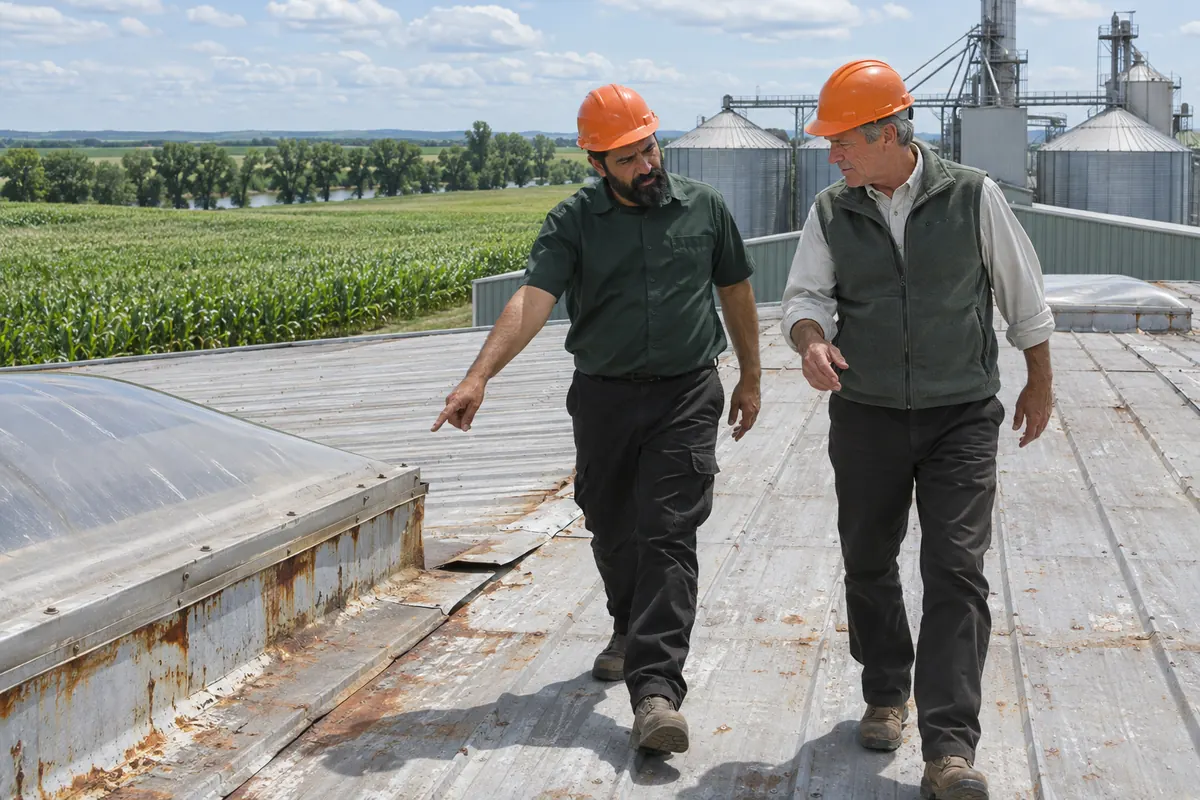
On sloped steel that drains, acrylic is a practical white coat that is easy to maintain.
The film flexes as panels expand in heat and shrink in cold, so it stays bonded at the laps.
White acrylic reflects much of the sun's heat, which cools panels and the space under them.
When the surface chalks and thins, a cleaned acrylic roof takes another acrylic coat directly.
Acrylic suits buildings where people keep working inside while the roof is coated.
Get a ballpark range for an acrylic coating on your steel roof using its size and address.
What To Have Ready
Acrylic needs dry weather and drying time between coats, so the job is staged carefully.
Get Free EstimateWe check that every section drains, look for water lines at gutters, test old coating for adhesion, and mark rust and failed screws.
Loose screws are reset, stripped ones replaced with larger fasteners, and any rust holes patched so the acrylic goes over solid steel.
Washing clears chalk and dirt, primer covers rusted areas, and polyester fabric goes into a base coat at laps, curbs, and screw rows.
The first coat goes on in a contrasting color, then a white topcoat. Each dries fully, and we watch the forecast so rain does not reach uncured coating.
Other systems that sit next to acrylic on mixed roofs.
Low runs where water pools need silicone, which handles ponding that acrylic would not.
Heavily rusted steel may need a fuller system with a urethane base under the topcoat.
Offices beside a steel shop sometimes have a shingle roof that can be coated in the same visit.
Common questions about acrylic coating on steel and older coated roofs.
Acrylic has a few weak points. Water that sits on it softens the film and can cause blisters or peeling. Rain soon after application can wash off coating that has not cured. It also takes more coats to build thickness. On steel that drains well, those limits rarely come into play.
Thickness, drainage, and recoat timing set its life. On sloped steel that drains fast, acrylic stands up to sun well. Chalking, thin spots at ridges, and wear along walk paths tell you a recoat is due, and recoating sound acrylic with more acrylic keeps the system going.
Yes, if the roof has enough pitch to shed water and has been cleaned, rust-treated, and primed. Acrylic bonds well to primed steel and moves with the panels through heat and cold. Seams and screws get fabric and base coat before the full acrylic coats go over the field.
Two or more, enough to reach the dry film thickness the coating maker specifies. We put the first coat on in a contrasting color so thin spots show before the white topcoat. Each coat dries before the next, and seams and screws get an extra reinforced layer.
White acrylic reflects much of the sun's heat and lowers roof surface temperatures in summer, so steel panels expand and contract less each day. Uninsulated shops can feel cooler inside. Dirt and chalk dull the surface over time, and cleaning brings the brightness back.
Winter is hardest on eaves, gutters, and valleys, where ice builds. Meltwater that refreezes can lift coating that went over poor prep, and snow sliding off steel can scrape seams near the edge. We look at those spots each spring and fix lifted coating or open laps before storm season.
Call about a sloped steel roof, or start a ballpark estimate to see an acrylic coating range.