Commercial Metal Roof Coating
Sloped steel sections beside a flat addition often get a steel system instead of silicone.

As a Fremont silicone roof coating contractor, we coat flat and low-slope roofs that pond, after finding wet insulation and testing the surface for bond.
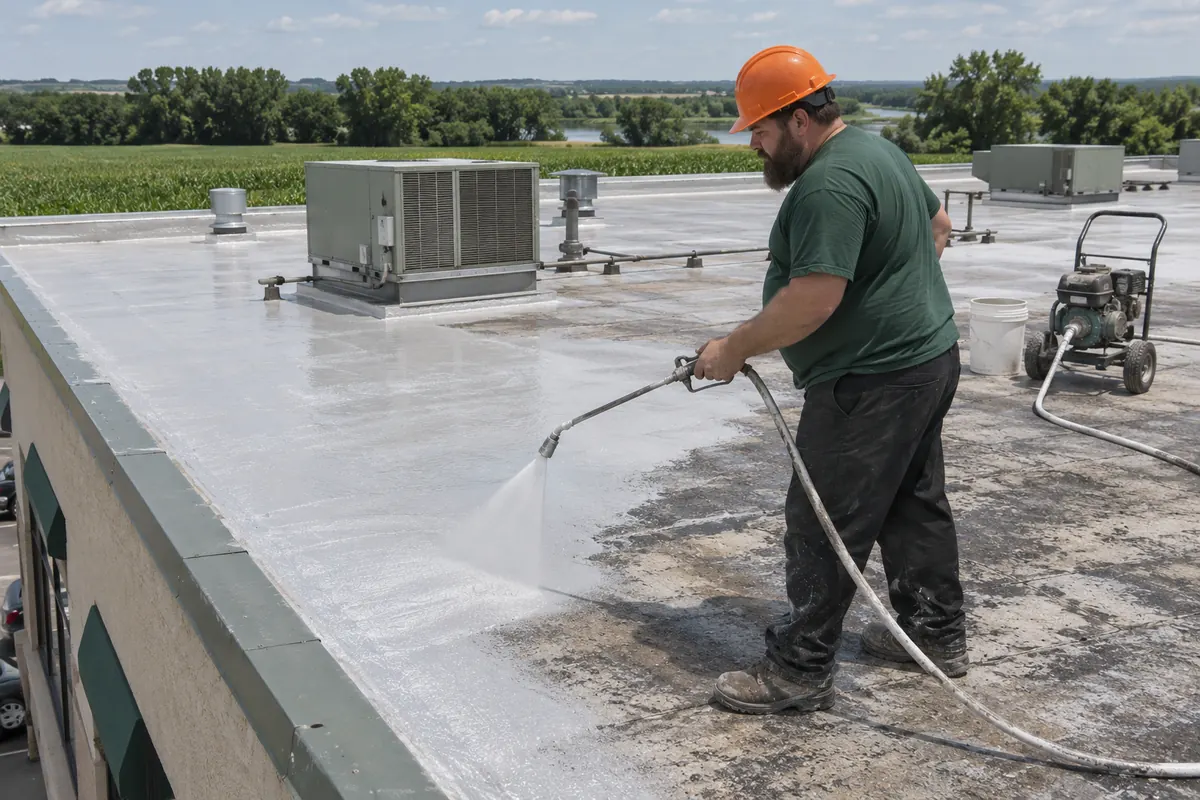
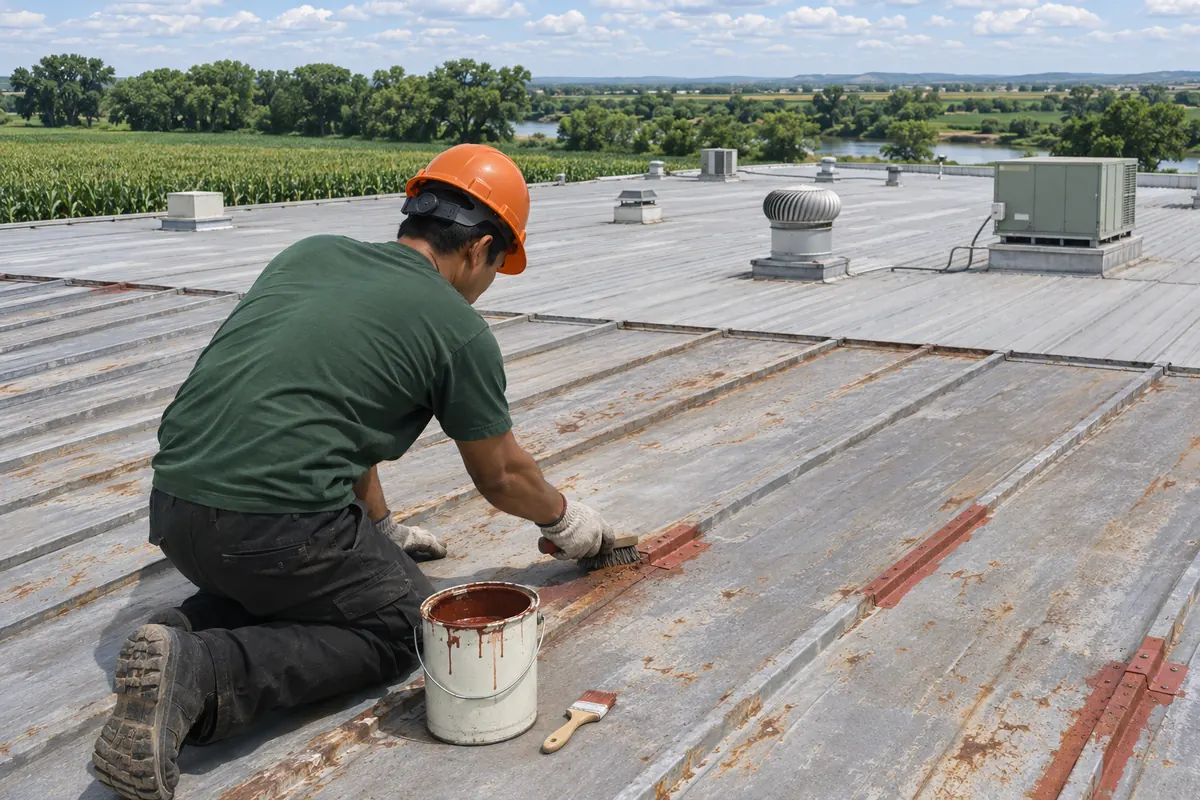
Fremont silicone roof coating fits roofs where water lingers, as long as the insulation below is dry. Check your roof against these conditions.
| What You See On The Roof | Good Fit | Fit After Repairs | Look at Another System |
|---|---|---|---|
| Water standing near drains after rain | Usually fits | Sometimes | Rarely |
| Aging single-ply or built-up surface | Usually fits | Sometimes | Rarely |
| Low-pitch steel with ponding at the eaves | Usually fits | Sometimes | Rarely |
| Soft or wet insulation under the deck | Rarely | Usually fits | Sometimes |
| Heavy daily foot traffic | Sometimes | Sometimes | Usually fits |
Low-slope roofs show trouble inside long before the surface looks bad.
Inside The BuildingCeiling stains in the middle of a room. Spots appear far from any wall.
On The RoofPonding over a seam. Water sits on a membrane seam until it finds a way through.
Inside The BuildingDrips that keep going after rain stops. Water keeps falling a day later.
On The RoofWet insulation. Insulation soaked from an old leak releases water slowly into the building.
Inside The BuildingWarm upper floor in summer. The top floor runs hot through July.
On The RoofDark, aged surface. Black built-up or worn single-ply soaks up sun across the whole roof.
Inside The BuildingWater backing up at a drain. Puddles form inside near a roof drain line.
On The RoofClogged roof drain. Debris and a raised drain ring hold water around the drain bowl.
Silicone goes over several surfaces, each with its own primer and prep.
| Option | What It Is | Where It Fits | Watch For |
|---|---|---|---|
| Silicone Over Single-Ply | Cleaned membrane, primer, silicone coat | Worn TPO or EPDM still firmly attached | Shrinking seams pulling apart |
| Silicone Over Built-Up | Bleed-block primer, then silicone | Gravel-free or swept built-up roofs | Asphalt bleed-through without primer |
| Silicone Over Low-Pitch Steel | Rust primer, lap base, silicone | Steel runs that hold water at eaves | Rust under failed old coatings |
| Silicone Recoat | Cleaned old silicone, new silicone coat | Silicone roofs with thin spots | Only silicone bonds to silicone |
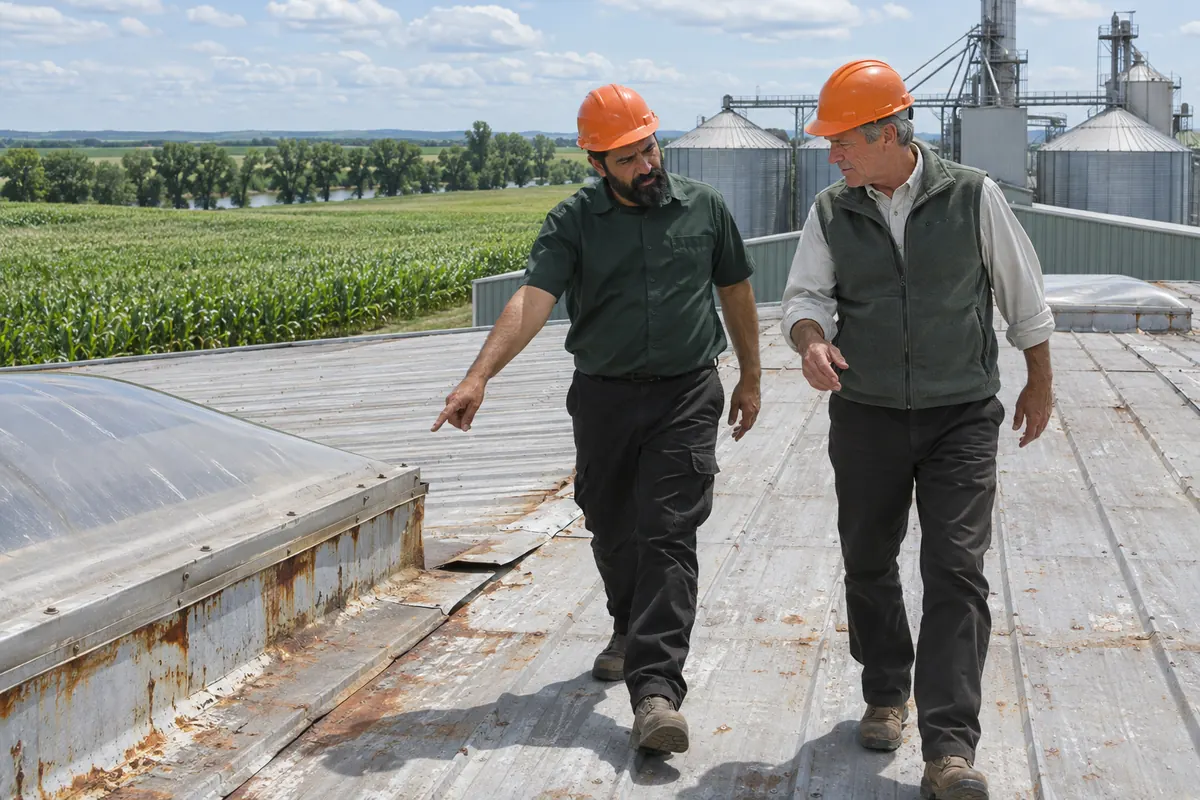
On a low-slope roof, silicone handles the water that other coatings struggle with.
Silicone tolerates water that sits for days at drains and low spots better than water-based coatings.
The film stays flexible under strong UV, so it ages slowly on wide-open flat roofs.
A firmly attached single-ply or built-up roof stays in place under the new coat.
High-solids silicone builds thickness in fewer passes, which shortens time on the roof.
Send the roof size and address for a ballpark coating range, then we find out what is under the ponding.
What To Have Ready
Silicone rewards careful prep. These four stages come first on every job.
Get Free EstimateCore cuts and a moisture meter show where insulation is wet. We mark ponding areas, open seams, and blisters, and check each drain for flow.
Saturated insulation is cut out and replaced so no trapped water sits under the new silicone. Open seams and blisters are repaired before coating.
The surface is washed and left to dry fully. Built-up roofs get a bleed-block primer, and every surface gets a test patch to confirm the bond.
Base coat reinforces seams and drains, then silicone covers the field. A wet mil gauge confirms the specified thickness section by section.
Mixed roofs often combine silicone with another system.
Sloped steel sections beside a flat addition often get a steel system instead of silicone.
Flat roofs short on insulation can get foam first, with silicone as the protective topcoat.
Where the roof drains quickly and you want easy water-based recoats, acrylic may fit better.
What owners want to know before choosing silicone.
There are three to weigh. Silicone holds on to airborne dust, which shows near grain handling and rail traffic. It also takes sharp impacts and foot traffic less well than tougher coatings. And repairs and recoats need silicone again, so the roof stays on that chemistry for good.
Usually primer on rusted areas, a base layer at seams and fasteners, and one or two full silicone coats. The coating maker's dry film thickness sets the total, and high-solids silicone can reach it in fewer passes. We confirm thickness with a wet mil gauge while spraying.
That comes down to the mils applied and the upkeep afterward. Silicone resists sun and standing water, so it ages slowly on flat areas. Dirt buildup, punctures from dropped tools, and hail cut its life short, while cleaning and spot repairs stretch it out.
Use silicone where water ponds or the slope is low, and acrylic where the roof drains fast. Silicone handles standing water and sun. Acrylic stays brighter and recoats with acrylic, but it softens under ponding. A roof with both conditions can carry each coating where it fits.
Yes, in cooler weather than many water-based products, because silicone cures from moisture in the air. The surface still has to be dry, clean, and frost-free, and each product has a minimum temperature. Fall silicone work gets planned around dew, frost, and short days.
Call about a flat or low-slope roof, or start a ballpark estimate with the roof size and address.